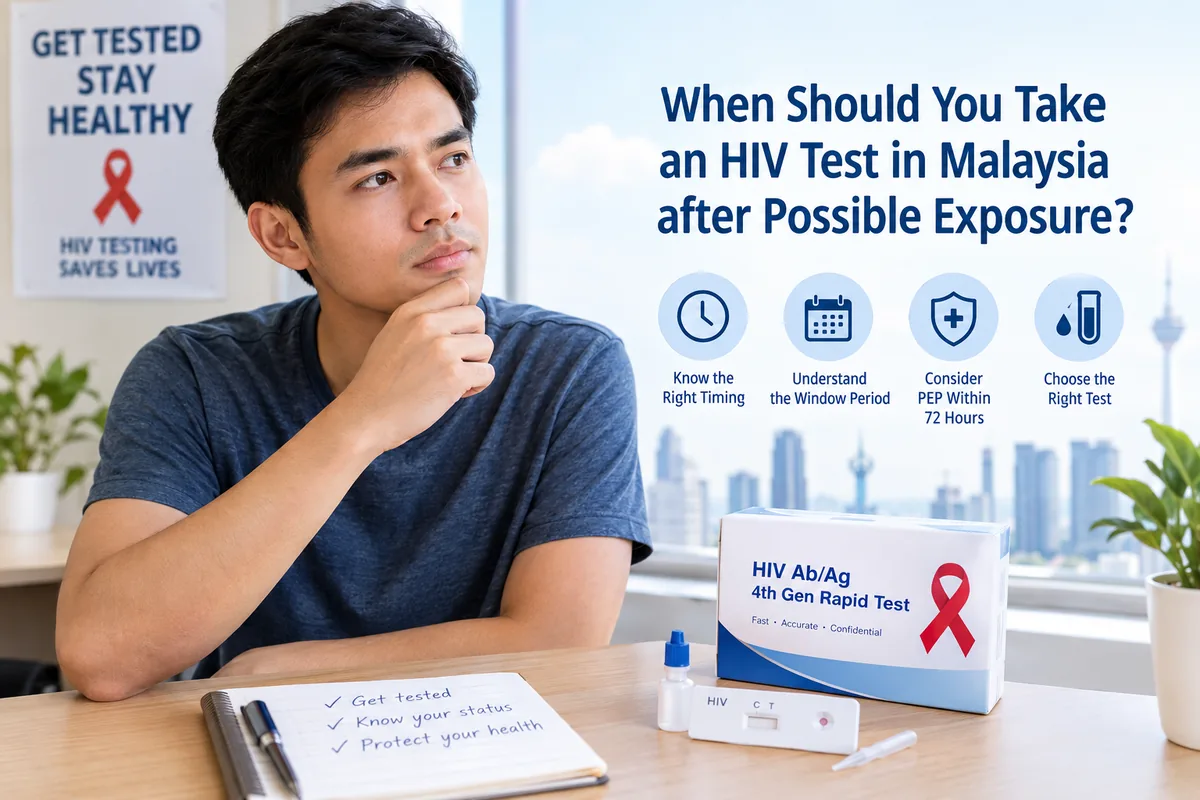
Worried about HIV after unprotected sex or another possible exposure? You are not alone. Many people in Malaysia have questions about when to take an HIV test and how long they should wait for an accurate result.
The good news is that HIV testing is simple and knowing the right time to test can help you take the next step with confidence.
However taking an HIV test too early may not give a clear answer. The best time to test depends on the type of test you use and how much time has passed since the possible exposure.
In this guide we explain when to take an HIV test in Malaysia, when to test again and what to do if you are worried about your health.
The first thing to understand is that no HIV test can detect an infection immediately after exposure. Your body needs time to develop the signs that a test looks for. This waiting period is called the HIV window period.
For example if you had unprotected sex yesterday an HIV test today cannot reliably rule out an infection from that event.
Still you should not simply wait without getting advice. If you think you may have been exposed to HIV recently contact a healthcare professional as soon as possible.
This is the most important time to act.
If you believe you may have been exposed to HIV within the last 72 hours visit a hospital or healthcare facility immediately and ask about PEP (post-exposure prophylaxis).
PEP is medicine that can help prevent HIV after a possible exposure. It must be started within 72 hours and starting sooner is better. A healthcare professional can assess your situation and explain whether it is suitable for you.
Do not wait for an HIV test result before seeking advice about PEP.
Different HIV tests need different amounts of time to detect an infection. Here is a simple guide to the usual testing windows.
Antibody tests look for the body's response to HIV. Many rapid tests and self test kits use this method.
Usual detection window: 23 to 90 days after exposure.
A test taken too early may miss an infection.
Repeat testing may be needed if your first result is negative.
Fourth-generation tests look for both HIV antibodies and a protein called p24 antigen. This can help detect HIV earlier than tests that look for antibodies alone.
A laboratory based fourth generation test using blood from a vein can usually detect HIV around 18 to 45 days after exposure. Rapid tests using a finger prick sample may have a different window period.
Always check the exact test type and its instructions before deciding when a negative result is reliable.
The right test depends on when the possible exposure happened and whether you need an early assessment or follow-up testing.
If you want to learn about available testing options visit the Bio Sure Test Kit website or explore its range of HIV and other testing products.
You can also read about the HIV Ab/Ag 4th Gen Rapid Test. Check the product information carefully to understand what the test detects, how to use it and when its result can be considered reliable.
Important: Do not assume every fourth generation rapid test has the same window period as a laboratory based fourth generation test.
A negative result can be reassuring but the timing matters.
If you test shortly after possible exposure the test may not detect an infection because you are still within the window period.
Follow these simple steps:
Check which type of HIV test you used.
Read the manufacturer's instructions about the window period.
Repeat the test at the recommended time if your first test was too early.
Speak with a healthcare professional if you are unsure when to test again.
For example some antibody tests may need up to 90 days after exposure to detect HIV reliably. Your healthcare professional can help you choose the right follow up date.
If you have taken PEP or other HIV prevention medicines your follow up testing schedule may be different. Follow your healthcare professionals advice.
A reactive result does not always mean that you have HIV. It means that further testing is needed.
Visit a healthcare facility for confirmatory testing and professional advice. Do not rely on a single self test to make a final diagnosis.
With early diagnosis and proper treatment people living with HIV can lead long and healthy lives.
You may want to speak with a healthcare professional about testing if:
You had sex without a condom.
A condom broke or slipped during sex.
You shared needles or injecting equipment.
A sexual partner has told you they have HIV or may have been exposed.
You want to check your HIV status as part of routine sexual health care.
Having a reason to test does not mean you have HIV. Testing helps you understand your status and decide what to do next.
You can ask a healthcare professional or local health clinic about HIV testing. Depending on your needs, you may be offered a laboratory test, a rapid test, or another suitable option.
If you prefer to explore home testing, you can visit Bio Sure Test Kit and review the available products. Always buy from a trustworthy source and check that the test is suitable for your needs.
Before using any home test, read the instructions carefully, check the expiry date and follow the stated steps. If the result is reactive seek confirmatory testing from a healthcare professional.
If the exposure happened within 72 hours, seek urgent medical advice about PEP.
Some people develop flu like symptoms after HIV infection while others have no symptoms at all. Symptoms cannot tell you whether you have HIV. Testing is the way to find out.
An early negative result may not be final. Make sure you test again when the window period for your test has passed.
Knowing when to take an HIV test can help you avoid unnecessary worry and make informed decisions. If you have had a possible exposure, act quickly, choose the right test and follow professional advice about repeat testing.
So when should you take an HIV test in Malaysia after possible exposure?
The answer depends on the test. A laboratory fourth generation test can usually detect HIV 18 to 45 days after exposure while many antibody tests may need 23 to 90 days. If exposure occurred within the last 72 hours seek urgent medical advice about PEP rather than waiting for a test.
Remember an early negative result does not always rule out HIV. Follow the test instructions and get professional guidance if you are unsure.
Taking the right steps at the right time is a practical way to look after your health.
Order your discreet test kit today with fast delivery across the Malaysia.
Shop Now