HIV testing is an important step in taking care of your health. Many people want to know their HIV status but may feel worried about visiting a testing center. Some prefer a private and simple testing option that they can use according to the product instructions.
One option is an HIV 4th Generation Test Kit. This type of test is also known as an HIV AB/Ag test. It is designed to look for two different signs of HIV infection in a blood sample.
But what does AB/Ag mean? How is a 4th generation test different from an older HIV test? And what should you know before choosing one in Kuala Lumpur, Malaysia?
Let’s explain it in simple words.
An HIV 4th Generation Test Kit is designed to detect two things:
HIV antibodies (AB)
HIV p24 antigen (Ag)
These are two different signs that may appear in the body after HIV infection.
Older antibody-only tests look for antibodies made by the body's immune system. A 4th generation combination test looks for antibodies and a viral protein called p24 antigen.
This combination can help detect HIV earlier than many antibody-only tests. However, the exact detection time depends on the type of test and the sample used.
Antibodies are made by the body's immune system to respond to an infection.
After a person gets HIV, their body needs time to produce enough antibodies for an antibody test to detect them.
This is why an HIV test taken too soon after a possible exposure may show a negative result, even if infection has occurred.
An antigen is a part of a virus or another substance that the immune system can recognise.
A 4th generation HIV test looks for the p24 antigen. This protein can appear in the blood during an early stage of HIV infection, before the body has made enough antibodies to be detected.
By looking for both antibodies and p24 antigen, an AB/Ag test can provide an additional way to detect HIV.
The main difference is that it checks for both HIV antibodies and p24 antigen.
Here is a simple comparison:
| Test Type | What It Detects |
|---|---|
| HIV antibody test | HIV antibodies |
| HIV 4th generation AB/Ag test | HIV antibodies and p24 antigen |
A combination test may detect HIV earlier than an antibody-only test in some situations.
However, not every 4th generation test works in exactly the same way. A laboratory test using blood from a vein and a rapid test using a finger-prick blood sample can have different detection windows.
According to the CDC, a laboratory antigen/antibody test using blood from a vein can usually detect HIV around 18 to 45 days after exposure. A rapid antigen/antibody test using finger-prick blood may have a window period of around 18 to 90 days.
These time ranges are general guidance and should not be treated as the exact window period for every product. Always check the specific test instructions.
People living in Kuala Lumpur may look for an HIV test that is easy to understand and suitable for their testing needs.
A self-test kit may offer a private testing option when the product is specifically intended for self-testing and the user follows the instructions carefully.
Before choosing an HIV test kit, check the following:
Make sure the product clearly states whether it is an antibody test or an antigen/antibody combination test.
Do not assume that every HIV rapid test is a 4th generation test.
Some HIV tests use blood collected from a finger prick. Others require a different sample or must be performed by trained staff.
Use only the sample type stated in the product instructions.
Look at the product information, expiry date, storage conditions and instructions for use.
You can explore the available products on the Bio Sure Test Kit website or browse the HIV and other self-test products.
The right test depends on what you need and how long it has been since a possible exposure.
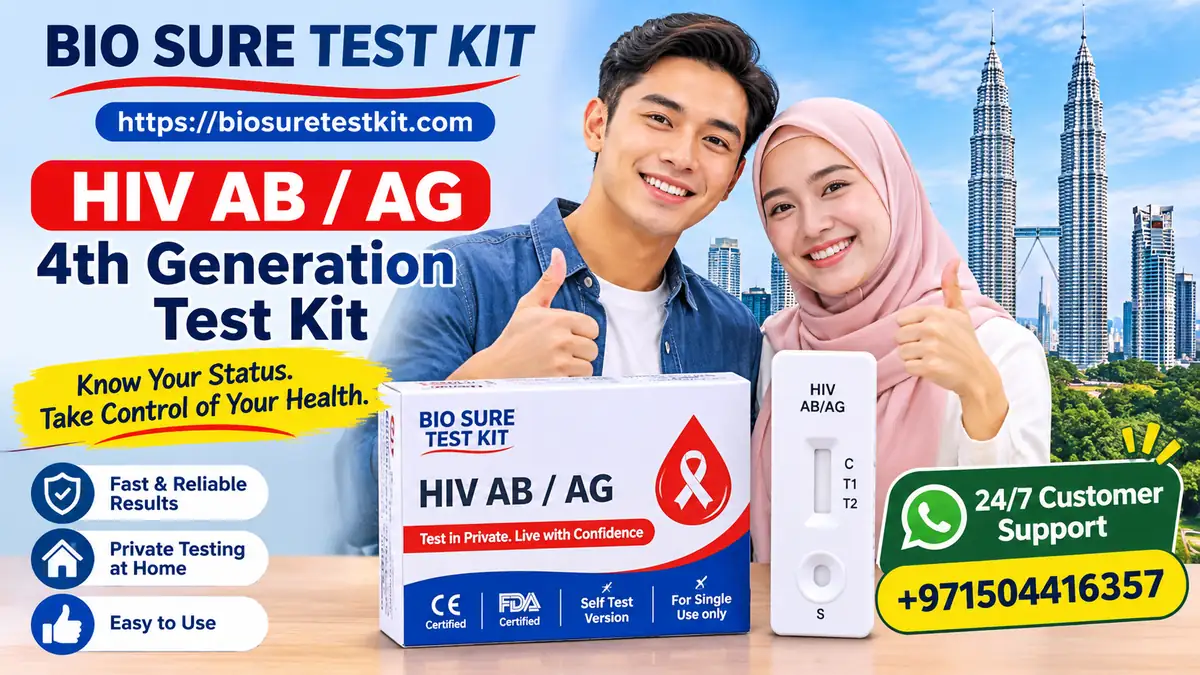
The HIV AB/Ag 4th Generation Rapid Test is a product option to review if you are looking for an HIV test that checks for antibodies and antigen.
Read the product information carefully to understand its intended use, sample type and testing limitations.
The HIV 1/2 Combo Test Cassette is another HIV testing product available from Bio Sure Test Kit.
Before choosing between these products, compare their test type, sample requirements and instructions. Do not assume that two products have the same detection window simply because both are HIV rapid tests.
The window period is the time between a possible HIV exposure and the time when a test can detect the infection.
No HIV test can detect infection immediately after exposure.
If you test too early, the result may be negative because the test has not yet detected enough antigen or antibodies.
For this reason, a negative result should be understood according to the window period of the exact test used.
If you have had a recent possible exposure, speak with a healthcare professional about the right time to test and whether repeat testing is needed.
A non-reactive result means the test did not detect the HIV markers it was designed to look for.
However, if the test was taken during the window period, HIV may not yet be detectable.
A reactive result means the test has detected a sign that may be linked to HIV infection.
It does not mean that a self-test alone has confirmed an HIV diagnosis.
A reactive self-test should always be followed by further testing with a trained healthcare provider.
An invalid result means the test did not work properly or did not produce a valid result.
Follow the product instructions. Usually, you will need to repeat the test using a new kit or visit a healthcare provider for testing.
Knowing your HIV status helps you make informed decisions about your health.
If HIV is detected, treatment can help people live long and healthy lives. Early diagnosis also helps people access the care and support they need.
HIV testing is not something to feel ashamed of. It is a normal part of looking after your health.
An HIV 4th Generation Test Kit is different from an antibody-only test because it looks for both HIV antibodies and p24 antigen.
This combination may help detect HIV earlier, but the exact detection window depends on the test type and sample.
If you are considering an HIV test kit in Kuala Lumpur, Malaysia, check the product details, sample type and instructions before use. Choose a test that matches your needs, and remember that a reactive self-test requires follow-up testing.
For more information about HIV and other self-test products, visit Bio Sure Test Kit and explore the available test kits.
Medical note: This article is for general information only. It does not replace medical advice, diagnosis or testing by a qualified healthcare professional.
Order your discreet test kit today with fast delivery across the Malaysia.
Shop Now