HIV testing is an important step in looking after your health. Many people in Kuala Lumpur want to know their HIV status but may feel nervous about getting tested. Some are unsure about how the test works, what it checks or when they should take one.
The good news is that HIV testing is simple and usually takes only a short time. Modern HIV test kits are designed to help detect signs of HIV infection through a small sample of blood.
If you are looking for information about HIV 1/2 testing in Kuala Lumpur this guide explains what the test detects, how it works and what the results mean.
An HIV 1/2 test is designed to check for signs of two main types of Human Immunodeficiency Virus:
HIV-1: The most common type of HIV worldwide.
HIV-2: A less common type, mainly found in parts of West Africa but it can occur in other regions too.
Both types can affect the body immune system. HIV attacks important cells that help the body fight infections.
An HIV 1/2 test helps identify whether a person may have an HIV infection. However different HIV tests look for different things. Some detect antibodies while others detect both antibodies and a virus protein called p24 antigen.
The answer depends on the type of test being used.
When HIV enters the body the immune system starts making antibodies to fight the virus.
Most HIV antibody tests look for these antibodies against HIV-1 and HIV-2. These antibodies may take several weeks to become detectable.
An HIV 1/2 screening test can help identify antibodies linked to both HIV-1 and HIV-2. This is useful because the test is designed to screen for both types instead of only one.
Some advanced tests such as fourth generation HIV tests Kit also look for the p24 antigen. This is a protein from HIV that can appear in the blood before antibodies become detectable.
Important: Not every HIV 1/2 test detects p24 antigen. Always check the product information to understand exactly what your test is designed to detect.
Most rapid HIV screening kits use a method called immunochromatographic testing. In simple words the sample moves through a special testing strip and reacts with materials designed to detect HIV markers.
Here is how a typical rapid blood test works.
A small blood sample is collected usually from a fingertip using a sterile lancet. Some tests may require a different sample type depending on the manufacturer instruction.
The blood sample is placed into the sample well of the test cassette. A special buffer solution may also be added as instructed.
The sample moves through the testing strip. If the target HIV markers are present they may react with the materials inside the test.
Wait for the exact reading time stated in the product instructions.
The test cassette has result areas that may show lines. These lines help indicate whether the test is reactive or non-reactive.
Always follow the instruction supplied with your particular test kit. Do not read the result after the permitted time.
Knowing how to read your result is important. A rapid HIV test generally provides one of the following outcomes.
A non reactive result means the test did not detect the HIV markers it was designed to find.
However a negative result does not always rule out HIV infection. If you tested too soon after a possible exposure, the test may not detect the infection yet.
A reactive result means the test has detected signs that may indicate HIV infection.
It does not automatically mean that you have HIV. A reactive screening result must be followed by additional testing through a qualified healthcare provider.
An invalid result means the test did not work correctly or the control line did not appear as required.
You should use a new test kit and follow the instructions carefully.
Timing is very important when testing for HIV. This is because the body needs time to produce detectable HIV markers. This period is known as the window period.
The window period depends on the type of test:
NAT test: Usually detects HIV around 10–33 days after exposure.
Laboratory antigen/antibody test: Usually detects HIV around 18–45 days after exposure.
Rapid finger-prick antigen/antibody test: Usually detects HIV around 18–90 days after exposure.
Antibody test: Usually detects HIV around 23–90 days after exposure.
If you test during the window period and receive a negative result repeat testing after the relevant window period has passed.
People living in Kuala Lumpur have different ways to learn their HIV status. These may include:
Government health clinics.
Private hospitals and medical center.
Qualified diagnostic laboratories.
Suitable home HIV screening kits.
Some people prefer home testing because it offers more privacy and convenience. However home testing must be done correctly and any reactive result needs professional follow up.
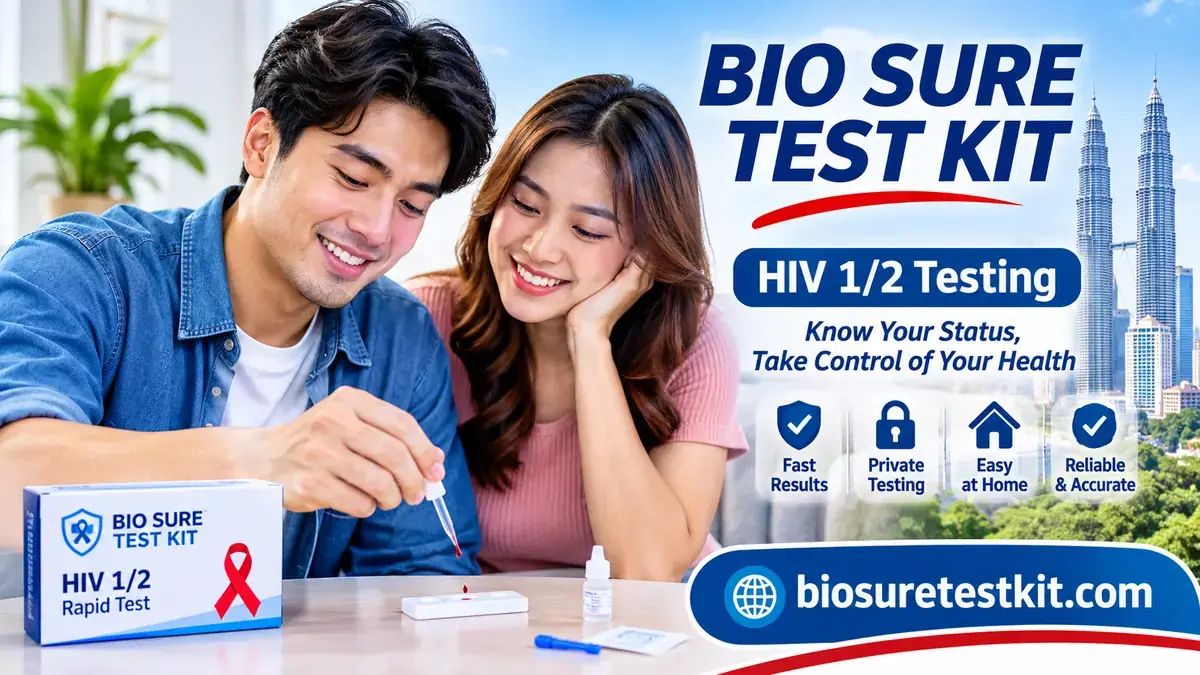
BIO SURE TEST KITS provides a range of testing products for people looking for convenient screening options.
If you are exploring HIV testing products in Kuala Lumpur or other parts of Malaysia you can visit the BIO SURE TEST KITS official website to learn more about the brand.
You can also explore the available HIV and other health testing products to find product information and understand the available options.
Before purchasing any test, check its intended use, sample requirements, certification information, expiry date, and manufacturer's instructions.
HIV-1 and HIV-2 are two types of HIV. HIV-1 is more common worldwide while HIV-2 is less common and is mainly found in West Africa.
Yes an HIV 1/2 antibody screening test is designed to detect antibodies against both HIV-1 and HIV-2. The exact detection capability depends on the test.
Rapid HIV tests can be reliable when used correctly and after the recommended window period. However no screening test should be treated as a final diagnosis. Reactive results need follow-up testing.
Yes suitable home HIV screening kits may be available. Always choose a test intended for home use and follow its instructions carefully.
Not always. If you test before the window period ends, HIV may not yet be detectable. Repeat testing at the recommended time if necessary.
Understanding HIV 1/2 testing can help you make better decisions about your health. These tests are designed to look for signs of HIV-1 and HIV-2 depending on the test type.
Whether you live in Kuala Lumpur, Selangor or another part of Malaysia, knowing when to test and how to understand the result is important.
Take the right steps, follow the test instructions, and speak with a healthcare professional if you receive a reactive result or have concerns about a possible exposure. Early testing and proper medical care can make a real difference.
Order your discreet test kit today with fast delivery across the Malaysia.
Shop Now